




서론
전통적으로 치과 진료는 시진 및 촉진과 같은 임상검사와 방사선 소견에 주로 의존하여 질환을 진단하여 왔으며 치료 술식 중심으로 발전하여 왔다. 물론 치의학 전공 분야에 따라 다양한 진단 검사가 활용되고 있지만 그 종류와 범위가 제한적이었던 것이 사실이다. 하지만 근거 기반 혹은 근거 중심(evidencebased) 의 진료와 P4 Medicine(predictive, personalized, preventive, participatory medicine) 방향으로 발전해 가고 있는 미래 의료의 발전 방향에 치과 진료도 예외일 수는 없다[1,2]. 즉, 근거 중심의 진료를 위해서는 과학적 근거에 기반하여 개개인에 적합한 치료법을 제공하여 줄 수 있는 진단 술식의 개발이 필수적일 것이며 진단검사의 대상은 광범위하지만 보다 비 침습적인(non-invasive) 술식을 활용하는 방향으로 발전해 갈 것이다. 특히 평균 수명의 증가로 초고령사회에 진입하였지만 여전히 실제 기대 수명과 건강 수명 사이에 큰 간극이 존재하고 이로 인해 개인과 가족에게는 고통이 증가하고 있으며 사회와 국가에게는 큰 경제적 부담이 되고 있다[3,4]. 이런 간극을 줄이기 위해서는 질환의 조기 진단 및 예방이 필수적이며 효율적인 진단술식의 개발이 더욱 중요함을 알 수 있다.
의학 분야에서 진단검사의학(laboratory medicine)이란 인체로부터 채취한 각종 검체(혈액, 소변, 대변, 체액, 뇌척수액, 세포 등)에 존재하는 특정 물질을 다양한 과학적 방법으로 측정, 분석, 판독하는 검사 행위를 수행함으로써 질병의 진단, 치료 및 예방에 도움을 주는 전문 진료과목으로, 주요 분야로는 검사실 운영(laboratory management), 진단혈액학 (diagnostic hematology), 임상화학(clinical chemistry), 임상미생물학(clinical microbiology), 진단면역학(diagnostic immunology), 수혈의학(transfusion medicine), 진단유전학 (genetic diagnostics) 및 검사정보학(laboratory informatics) 분야가 있다. 진단의학검사의 목적은 1) 질병진단 및 감별진단, 2) 질병 중증도 및 경과 판단을 통한 치료방침 결정, 3) 예후판정, 4) 건강검진이나 선별검사를 통한 질병 조기발견 및 예방, 5) 치료효과 추적관찰 등을 들 수 있다. 대한진단검사의학회는 1980년 대한임상병리학회로 출범해 1981년 대학의학회 내 공식학회로 승인 받았으며 공식영문 명칭은 The Korean Society for Laboratory Medicine (KALD) 으로 2021년 기준으로 전국에 약 1,100여명의 전문의가 있다[5].
대한진단검사치의학회(The Korean Academy of Laboratory & Diagnostic Dentistry, KSLM)는 진단검사치의학 분야의 연구 및 의료 발전을 선도함을 목적으로 2017년 6월 16일 발족되었으며 2025년 2월 18일 대한치과의사협회 인준 학회가 되었다. 진단검사치의학이란 치의학 분야에 특정된 다양한 진단검사 술식의 개발 및 적용과 관련된 분야를 포함할 뿐만 아니라 다양한 의학적 진단검사 술식을 구강악안면 질환의 진단에 적합하게 변형 발전시키는 분야를 포괄한다고 할 수 있다. 이와 함께 타액과 같은 치의학 분야의 특화된 검체를 활용하여 건강상태 모니터링(health surveillance) 및 질환 진단과 관련된 분야를 연구하는 영역도 포괄할 수 있을 것이다.
본 종설에서는 진단검사치의학의 발전을 위해서 현재 치의학 영역의 진단학적 검사 항목을 살펴보고, 그 문제점 및 발전 방향을 검토해 보고자 한다. 구강악안면 영역 질환의 진단에 필요한 ‘건강보험 요양급여비용’ 책자[6]에 있는 모든 검사 관련 항목이 논의의 대상이 될 수 있지만, 본 종설에서는 진단검사치의학 분야의 발전 방향을 제시하기 위하여 치의학 영역에 특화된 진단검사 술식으로 논의를 축소하고 이를 확장 발전시키는 전략에 대해 토의하고자 한다.
치의학 영역의 진단학적 검사 항목
1. 치의학 영역에 특화된 건강보험 행위 진단검사 항목
건강보험 급여 검사 항목 중 ‘기능 검사료’ 영역에 치의학 분야에 특화된 검사항목을 나열한 [치아 검사] 분류가 있고 9개 항목이 포함되어 있다(Table 1). 이를 살펴보면 ‘전기치수반응검사(electrical pulpal test)’, ‘근관장측정검사(root canal length measuring)’, ‘치주낭 측정검사(periodontal pockets test)’, ‘교합분석(occlusional analysis)’, ‘측두하악장애분석검사(analytical assessment of temporomandibular disorders)’, ‘정량광형광기를 이용한 치아우식증 검사(detection of caries by quantitative light-induced fluorescence)’, ‘하악운동궤적검사(mandibular kinesiography)’, ‘관절음도검사 (TMJ sonography)’ 및 ‘동기능적 교합검사(dynamic functional occlusion analysis)’가 포함되어 있다[6]. 해당 검사에는 전기치수반응검사나 측두하악장애분석검사와 같이 일상적으로 진료실에서 시행되는 술식도 있지만 검사의 활용도가 낮은 술식도 있다. 또, 장비의 발전에 따라 검사 술식의 적응증, 적용법 및 검사 결과에 대한 해석과 의미가 발전되거나 변화되는 술식도 있을 수 있다. 그러므로 지속적인 연구를 통해 기존 검사 항목의 과학성을 축적하고 활용도의 적정성에 대한 제안이 필요하며, 활용도가 낮은 검사 항목의 경우 그 이유에 대한 조사도 필요할 것이다.
건강보험 급여 검사 항목과 유사하게 건강보험 비급여 검사 항목의 경우에도 ‘기능 검사료’ 영역에 치의학 분야에 특화된 검사항목을 나열한 [치아 검사] 분류가 있고 7개 항목이 포함되어 있다(Table 2). 이를 살펴보면 ‘교합음도검사’, ‘구취측 정’, ‘치아우식활성도 검사’, ‘타액검사(분비율, 점조도, pH, 완충기능검사)’, ‘하악과두위치와 운동검사 및 분석(axiograph 이 용)’, ‘하악과두위치와 운동검사 및 분석(mandibular position indicator 이용)’과 ‘인상채득 및 모형제작(impression taking and cast construction)’ 항목이 있다[6]. 비급여 항목 역시 항목에 따라 활용도에 차이가 있을 수 있으며 검사 술식의 개발에 따른 항목 내용의 검토가 필요할 수 있다.
2. 치의학 영역과 관련된 건강보험 행위 진단검사 항목
건강보험에 포함된 행위 중 다양한 검체 검사, 병리 검사, 기능 검사, 초음파 검사 및 영상 진단 검사가 이미 구강악안면 질환의 진단에 활용되고 있음은 주지의 사실이다. 하지만 해당 검사법의 최신 발전 내용을 구강악안면 질환 진료현장에 적용하는 노력은 지속되어야 한다. 이와 함께 급속히 증가하고 있는 의과 검사 항목에서 구강악안면 질환의 진료에 활용 가능한 항목을 지속 탐구하고, 그 학문적 근거를 조사, 연구하는 것은 매우 중요하다.
치의학 진료영역에 오랫동안 적용해 온 해당 급여검사 항목의 예를 보면, [신경계 기능검사] 항목에 있는 ‘근전도검사 (electromyography)(라. 두부 head 항목을 적용할 수 있다)’ 와 치과진료실에서 간이심리검사로 활용되고 있는 SCL-90- R(Symptom Checklist 90-Revised)를 실시한 경우 적용하고 있는 ‘증상 및 행동 평가 척도(symptomatic and behavioral evaluation scale) 검사’를 들 수 있다. ‘증상 및 행동 평가 척도 검사’의 경우 다양한 구강악안면 질환과 심리학적 특성과의 관련성을 고려할 때 우울, 불안 및 신체증상 장애와 같은 세부 영역에 대한 추가적인 검사로의 확대가 필요함이 제안된 바 있다. 이에 따라 최근 측두하악장애와 관련된 행동 및 심리사회적 평가 항목인 ‘측두하악장애 진단기준 축II 포괄검사(diagnostic criteria for temporomandibular disorders(DC/TMD) Axis II: comprehensive)’가 신의료기술로 공지된 바 있다. 비급여 [신경계 기능검사] 항목으로는 ‘미각검사(taste test)(인지 및 역치검사)’가 있다[6](Table 3).
때로는 해당 검사 항목을 구강악안면 질환에 맞게 변형하는 것이 필요한 경우도 있다. 예를 들면 비급여 [신경계 기능검사] 항목인 ‘정량적 감각기능 검사(quantitative sensory test) (진동역치, 온도역치, 전류인지역치 포함, 통증역치 검사도 포함)’ 의 경우 검사하려는 해부학적 부위에 맞게 변형이 필요하다. 특히, 구강악안면 질환의 진료를 위한 ‘미생물 배양, 동정 및 약제 감수성 검사’의 경우에는 구강미생물의 특수성을 고려해 볼 때 하나의 새로운 영역이라고 하여도 과장이 아닐 것이다. 이와 함께 구강악안면 질환의 진료에 직접적으로 도움이 되지만 해당 분야에 대한 관심 부족으로 활발히 활용되지 못하고 있는 검사 항목도 있다. 예를 들면 [신경계 기능검사] 비급여 항목에 있는 ‘연하장애평가’, ‘발음 및 발성검사’, 및 ‘언어전반진단 검사’ 항목이 이에 포함된다[6](Table 3).
진단검사치의학 분야의 문제점
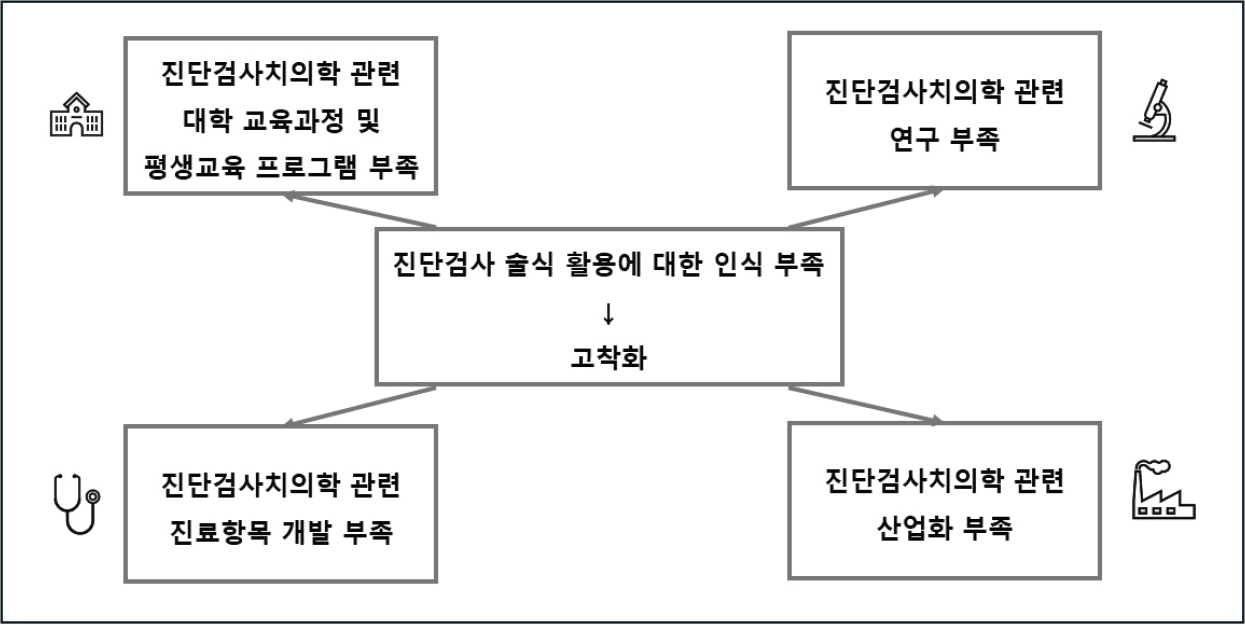
1. 진단검사 술식 활용에 대한 인식 부족의 고착화
치과 분야는 의과에 비해 상대적으로 진단 술식 보다는 치료 술식의 개발에 의해 발전해 왔으며 이런 전통적인 발전 경향이 치의학과 관련된 진단검사 술식 발전 저해의 이유로 여겨지기도 한다. 치의학은 ‘외과학의 특성을 가지고 있는가? 내과학의 특성을 가지고 있는가?’하는 논쟁은 학문적 융합이 필연적이고 빅데이터 활용과 정밀의료가 현실화되는 시대에서는 큰 의미를 가지기 어렵다. 전통적인 프레임을 탓하기 보다는 미래지향적인 발전을 선도하거나 발전과정에 적응하지 못하고 갇혀있는 우리의 인식이 더 중요한 요인이며 이런 인식의 고착화가 더욱 결정적인 방해요인이다.
2. 인식 부족의 고착화와 관련된 요인
이러한 인식 부족의 고착화는 대학의 교육과정과 평생교육 프로그램에 영향을 미치고, 진단검사 관련 학문에 대한 관심과 연구의 부족, 진단검사 관련 진료항목 개발 미비 및 진단검사 관련 치의학 산업의 비활성화와 관련이 있으며 이런 요인은 피드백을 거쳐 악순환의 고리를 형성하고 있다(Fig. 1).
진단검사치의학 분야의 발전 방향
진단검사치의학 분야의 발전 방향을 단기적 측면과 중장기적 측면으로 나누어 생각해 보고자 한다. 단기적으로는 기존 검사법의 활용을 활성화하거나 기존 검사법의 간단한 변형을 통하여 치의학 분야로 활용도를 확장할 수 있는 항목을 탐구하는 것이다. 중장기적으로는 진단검사치의학 분야에 대한 연구개발의 활성화가 필수적이다. 이를 위해서는 우선 진단 술식 활용에 대한 인식 부족의 고착화를 깰 수 있는 사고의 전환이 필요하다.
1. 진단검사 술식 활용에 대한 사고의 전환
구강건조감을 호소하면서 내원한 환자의 경우 문진과 시진을 통해 구강건조증을 진단하는 경우와 타액분비율 측정을 진행하는 경우를 비교하여 설명해 보고자 한다. 일반적으로 구강건조감으로 인한 환자의 주관적 호소의 심도는 객관적인 타액분비율 감소와 비례 관계를 보이지 않는다는 것은 잘 알려진 사실이다[7-9]. 일반적으로 행해지는 ‘비자극성 및 자극성 전 타액 타액분비율 검사(measurements of unstimulated and stimulated whole salivary flow rates)’를 시행한 경우, 타액분비 감소의 심각도, 주로 영향을 받은 타액선(이하선 혹은 악하선/설하선)에 대한 논리적 추정과 자극을 유도하는 치료법에 대한 반응을 예측해 볼 수 있게 해 준다[10]. 이와 함께 ‘타액 pH’ 와 ‘타액 완충능 검사’까지 시행된다면 타액분비가 감소된 환자에서 향후 치아우식의 발생 위험도를 평가할 수 있다 (치면세균막 pH검사와 치아우식 유발 세균 검사를 포함하는 경우 ‘치아우식활성도 검사’가 된다).
환자가 구취를 호소하면서 내원한 경우, 구취 측정기를 활용한 ‘구취측정’은 구취의 심도를 객관적 수치로 제공하고 구취를 주로 유발하는 황화합물 중 H2S와 CH3SH 농도를 분리해서 제공해 줌으로써 구취의 주요 발생 부위를 예측하게 해 준다[11]. 이와 함께 ‘타액분비율 검사’가 시행될 경우 해당 환자에서 타액분비 감소 여부가 구취에 미치는 영향을 알 수 있으며 ‘증상 및 행동 평가 척도 검사’가 시행될 경우 환자의 심리학적 특성과 구취와의 관련성을 추정할 수 있게 해 준다[12].
이와 같이 진단 및 치료계획에 도움을 주는 기존의 검사 술식의 과학적 근거를 이해하고 이를 적극 활용하고자 하는 사고의 변화가 필요하다. 물론 적용하는 진단 술식은 근거에 기반한(evidence-based) 과학성을 가지고 있어야 하며 진단, 치료 계획 및 예후 추정에 도움을 줄 수 있어야 한다.
2. 유용한 진단검사 항목의 도입과 발전
진료에 직접적인 도움을 주는 진단검사 항목의 적극적인 도입과 항목개발 및 추가 연구가 필요하다. 혁신적인 진단 도구 및 기기 개발은 큰 도전이지만 외국에서 이미 개발되어 진료에 활용되고 있거나 진료에 활용 가능성이 매우 높은 술식이나 기기 중 그 과학적 타당성이 입증되고 검사 요구도가 큰 항목은 국내에서도 진료 항목화될 필요가 있다. 예를 들면 구강암의 조기 발견을 위한 다양한 도구와 기기가 좋은 예가 될 수 있으며 vital staining, chemiluminescence 및 spectroscopy 도구 등이다[13].
추가적인 예로는 구강노쇠 진단평가법의 도입이다. 노인 인구의 급격한 증가로 인한 만성질환, 노쇠, 장기요양, 돌봄의 문제는 큰 사회적 이슈가 되었다. 영양감소, 근감소증, 신체노쇠 및 사망으로 이어지는 일련의 과정에서 구강건강과 기능의 유지는 영양과 섭식유지 및 만성염증의 감소를 통하여 신체노쇠 예방에 중요한 역할을 하는 것이 잘 알려져 있다[14,15]. 일본의 경우 구강노쇠 진단 및 평가과정이 건강보험 대상항목이고 평가도구도 잘 개발되어 있다[15,16]. 국내의 경우에도 구강노쇠 진단과정을 행위 항목화하기 위한 노력이 진행되고 있다[17]. 이를 위해서는 해당 분야에 대한 국제수준의 국내 연구, 효율적인 정책적 접근과 해당 분야의 산업화 과정이 필수적이다.
3. 진단검사치의학 분야 연구개발
장기적으로는 치의학 분야에 특화된 진단 술식과 장비 개발이 필수적이다. 미래의 의료가 예방에 중점을 둔 개개인에 적합한 치료법을 제공해 주는 방향으로 발전할 것이라는 점을 고려하면, 빅데이터와 인공지능, 정밀의료에 기반한 진단 술식의 개발이 필수적일 것이다. 그리고, 보다 비침습적인 술식을 활용한 진단법 개발이 요구되고, 질환 진단 뿐만 아니라 예방에 중점을 둔 건강상태 감시를 위한 도구나 장비 개발이 필수적이다. 이러한 관점에서 보면 타액을 활용한 질병 진단 및 건강상태 감시 도구의 개발 분야도 더욱 주목을 받을 수 있을 것이다[18,19].
하지만 가장 중요한 것은 진료 현장에 적용할 수 있는 임상적 유용성이다. 연구실험실에서 유용한 항목으로 발견된 바이오마커와 진단용 기기가 과학적 신뢰도(reliability) 및 타당도 (validity)의 장벽을 넘지 못하는 경우가 빈번하다. 때로는 시장성 측면에서 어려움을 겪을 수도 있다. 혁신적이고 실제적인 연구성과와 글로벌 시장을 염두에 둔 산학협력 개발이 필요한 이유이다.
결론
미래 치과의료는 진단검사치의학 분야의 발전을 필요로 한다. 하지만 현재 치의학 분야에 특화된 진단검사 술식은 매우 한정적이며 진단검사치의학 분야의 발전도 초보적인 단계이다. 발전을 저해하는 가장 큰 요인은 진단검사 술식 활용에 대한 치과계 인식 부족의 고착화이며 이는 진단검사치의학에 대한 교육, 진단검사 관련 학문에 대한 관심과 연구의 부족, 진단 검사 관련 진료항목 개발 미비 및 진단검사 관련 치의학 산업의 비활성화에 영향을 미치고 있다. 이를 타개하기 위해서는 진단 술식 활용에 대한 인식 부족의 고착화를 깰 수 있는 치과계의 사고의 전환이 필요하다. 이와 함께 단기적으로는 기존 검사법의 활용을 활성화하거나 기존 검사법의 변형을 통하여 치의학 분야로 활용도를 확장할 수 있는 항목을 탐구할 필요가 있으며 장기적으로는 진단검사치의학 분야에 대한 연구개발의 활성화가 필수적이다.


 PDF Links
 PubReader
 ePub Link
 XML Download
 Full text via DOI
 Download Citation
 Print
Print


